CRITICAL APPLICATIONS LEAVE NO ROOM FOR COMPROMISE
Food and beverage production is considered one of the most critical compressed air applications. Health risks, costly recalls and perishable goods make it difficult to build a reliable system. Get tips on how to overcome this challenge!
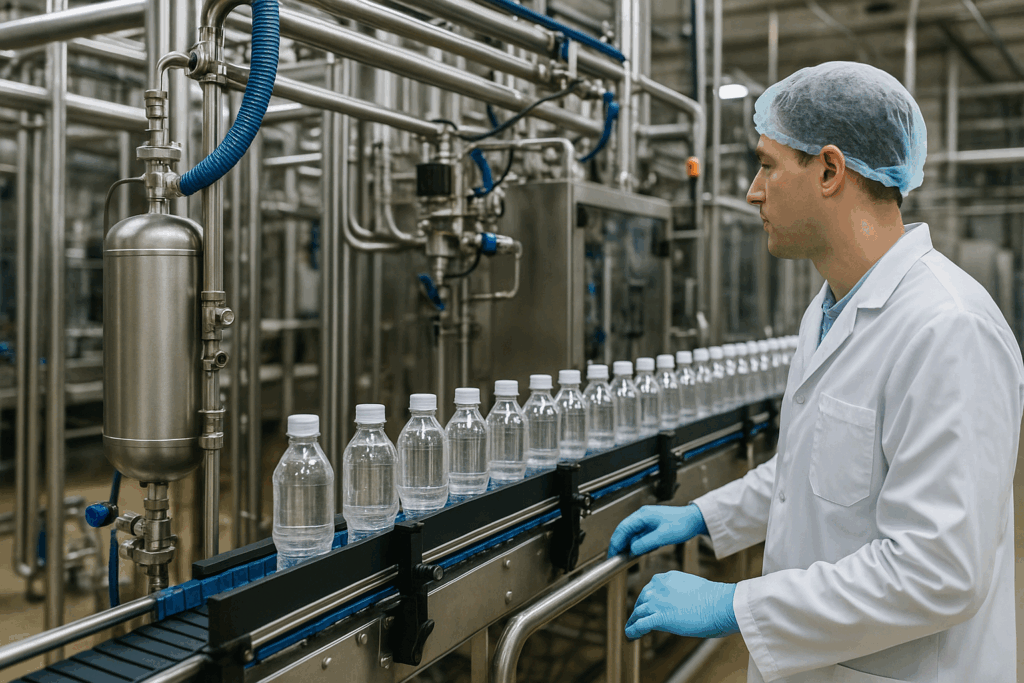
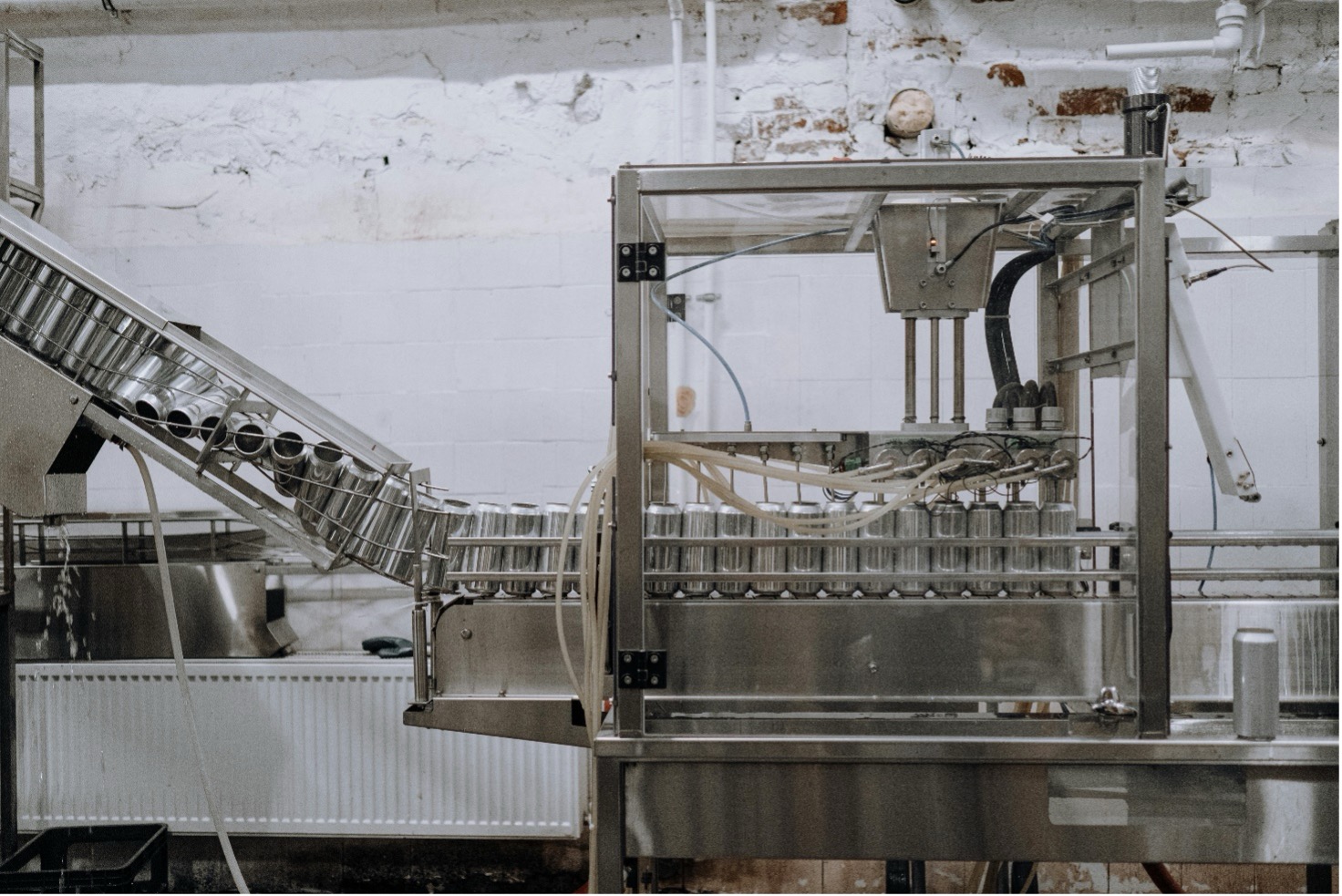
Compressed air or pneumatics plays an important role in many areas of the food industry. It is used to transport ingredients, process dough and beverages and package finished products. Even if the compressed air does not come into direct contact with the product, it is often used to operate machines and systems, transport containers and for other ancillary activities.
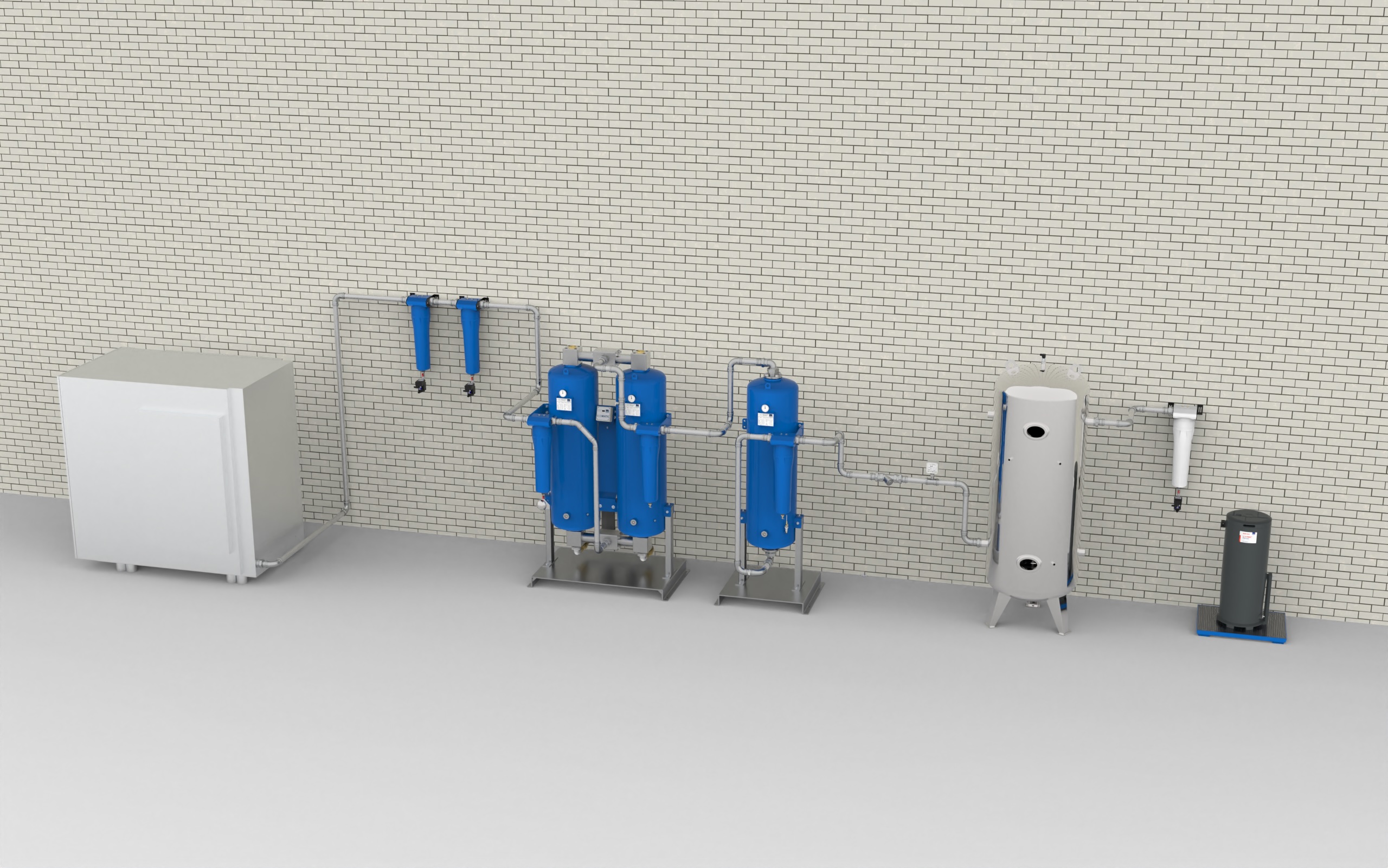
Compressed air systems can generally be divided into three main areas: Compression, treatment and distribution. In many systems, compression and treatment (filters and dryers) are located in the so-called compressor room. The distribution extends across the entire production area and is usually realised through widely branched piping networks.
POSSIBLE RISKS FROM COMPRESSED AIR
Due to the direct or indirect contact of compressed air with the end product, compressed air is considered a critical control point in HACCP where product safety can be compromised.
As the compressed air passes through many different units and travels long distances before it reaches the point of use, there are many potential sources of contamination: in the compressor due to mechanical wear, at leaking valves or screw connections, in filters with irregularly maintained filter elements ...
QUANTIFICATION OF COMPRESSED AIR QUALITY
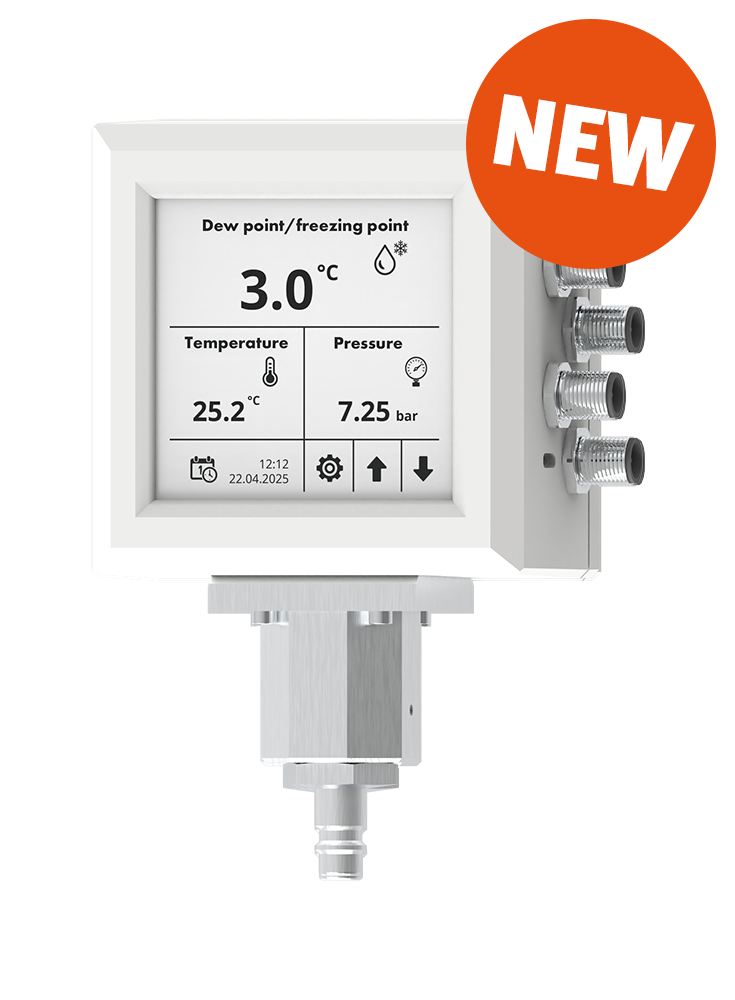
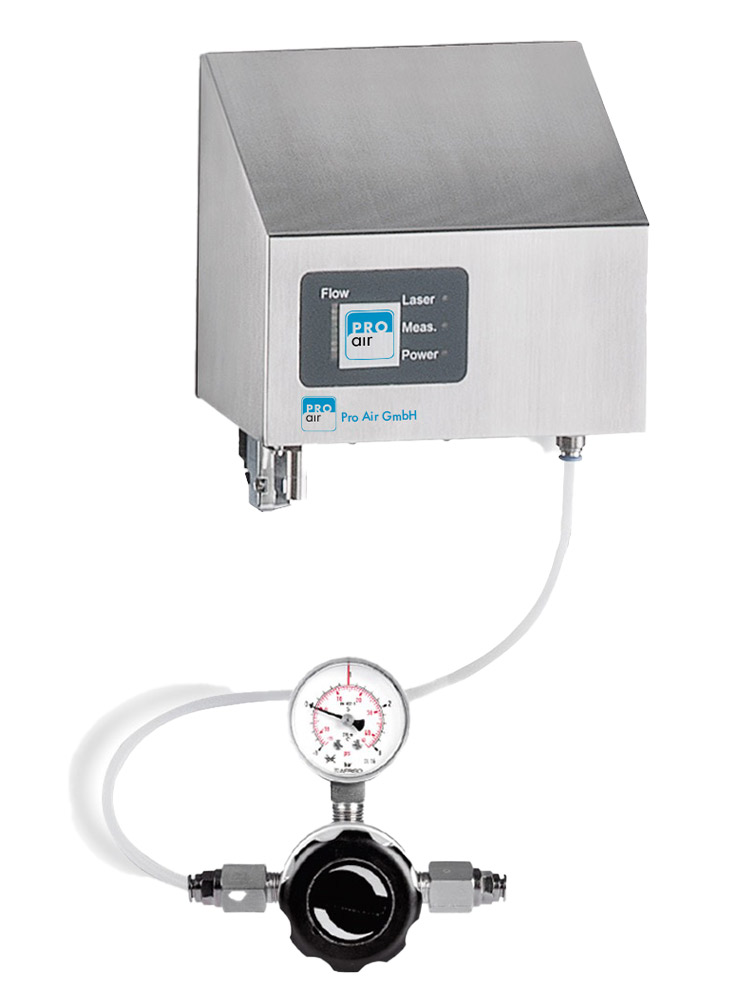
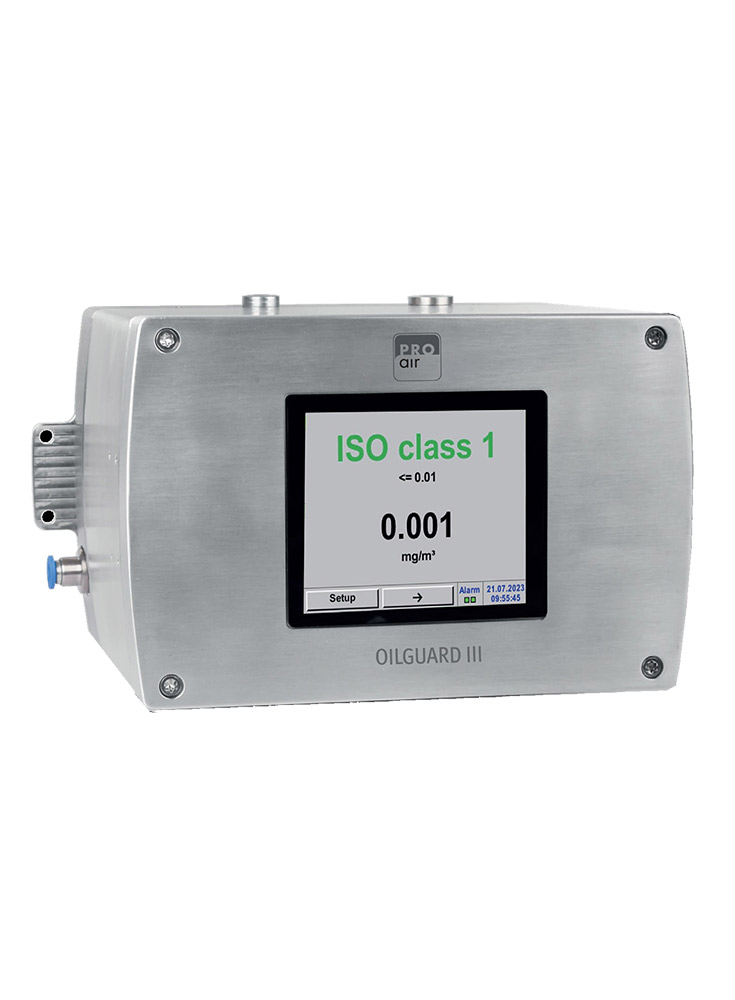
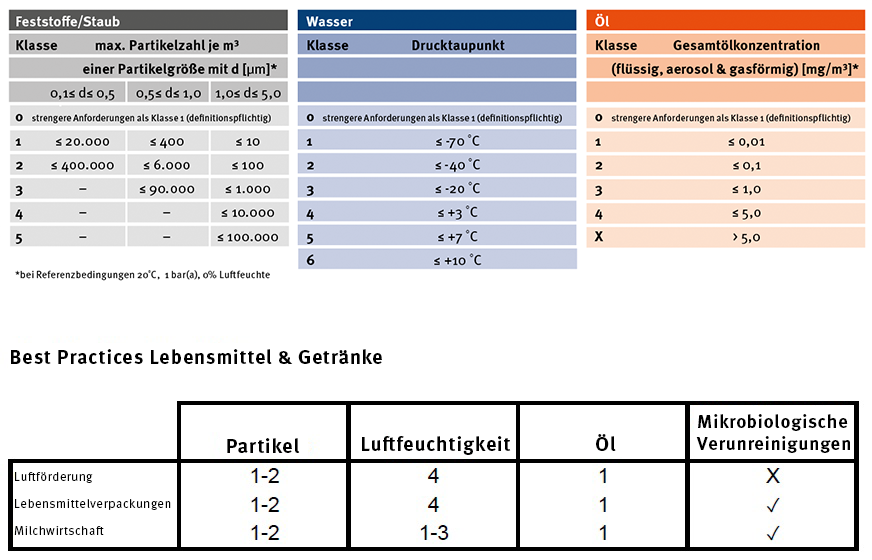
The ISO 8573 standard was created to make the compressed air quality in the network objectively measurable and controllable. This standard lists the most important contaminants in compressed air systems and divides them into quality classes: Particles, water, oil.
In addition, the sub-standard ISO 8573-7:2003 defines a test method for determining viable microbiological contamination. This allows the presence of bacteria and fungi in the air to be determined or ruled out.
MAINTAINING COMPRESSED AIR QUALITY
The quality of compressed air in food production must be ensured by several measures in accordance with GMP:
1. selection of suitable systems and components to achieve the quality requirements
2. appropriate maintenance (servicing) and inspection of the system and the associated quality requirements
3. documentation of processes, maintenance, calibrations and test procedures for compliance with legal requirements
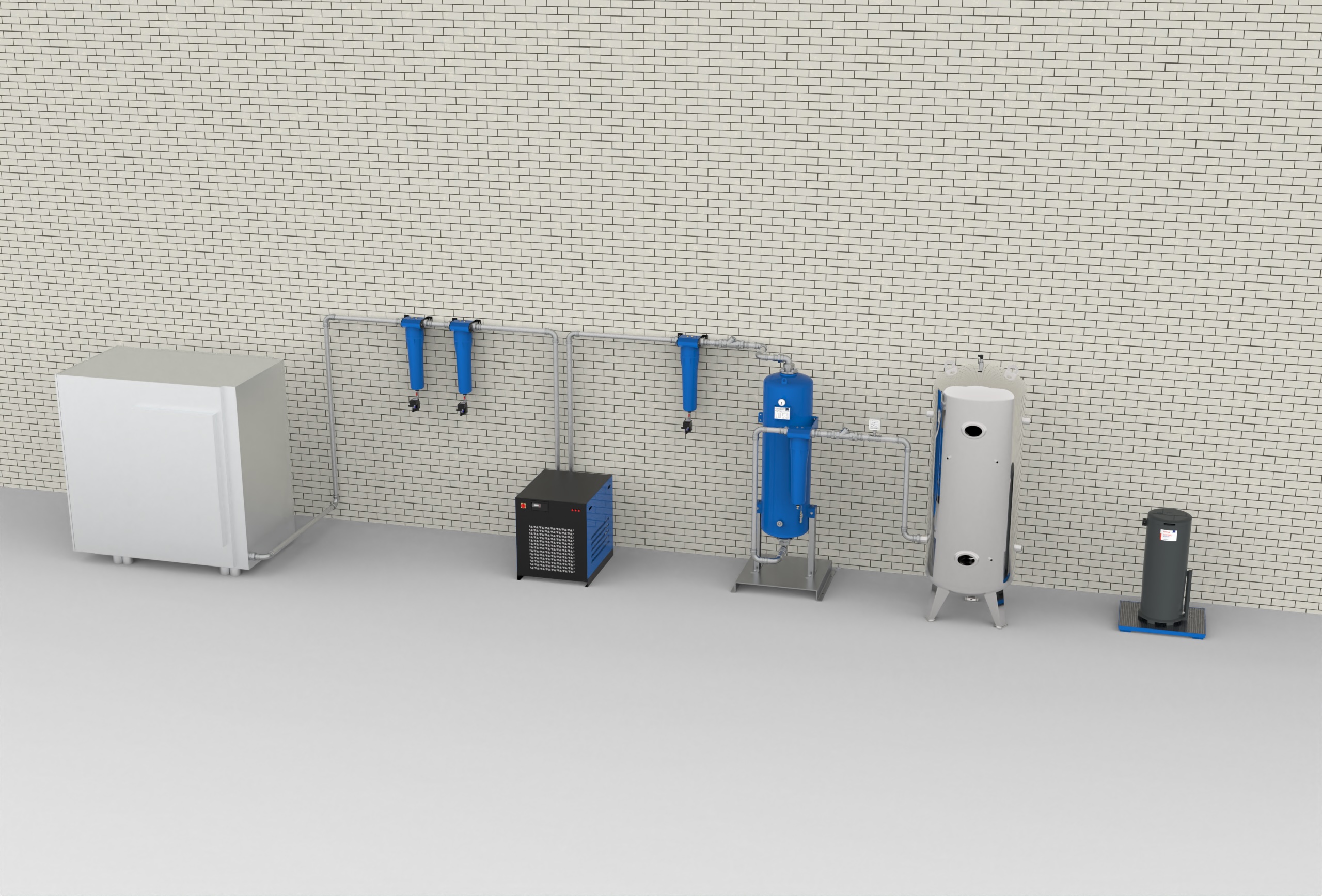
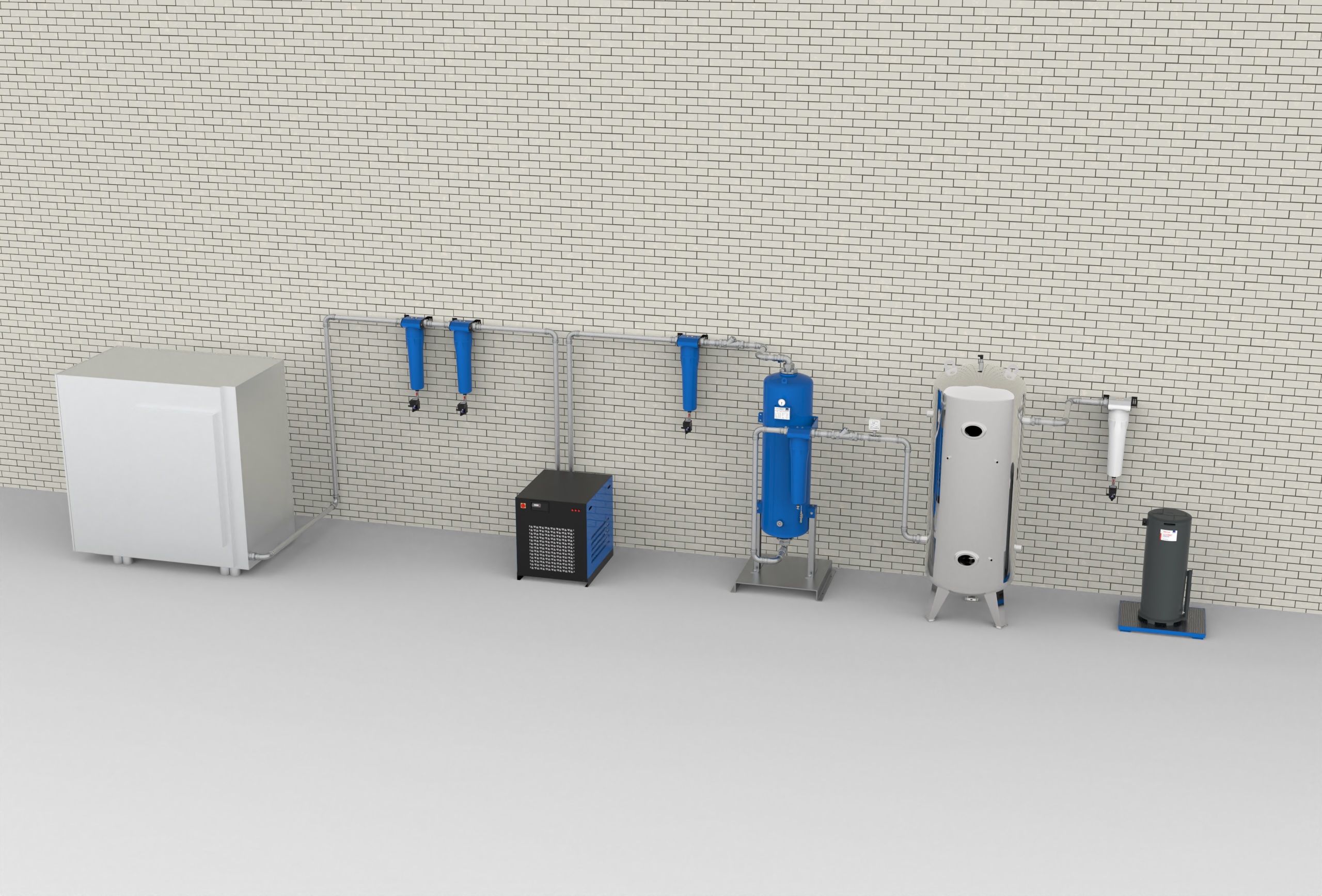
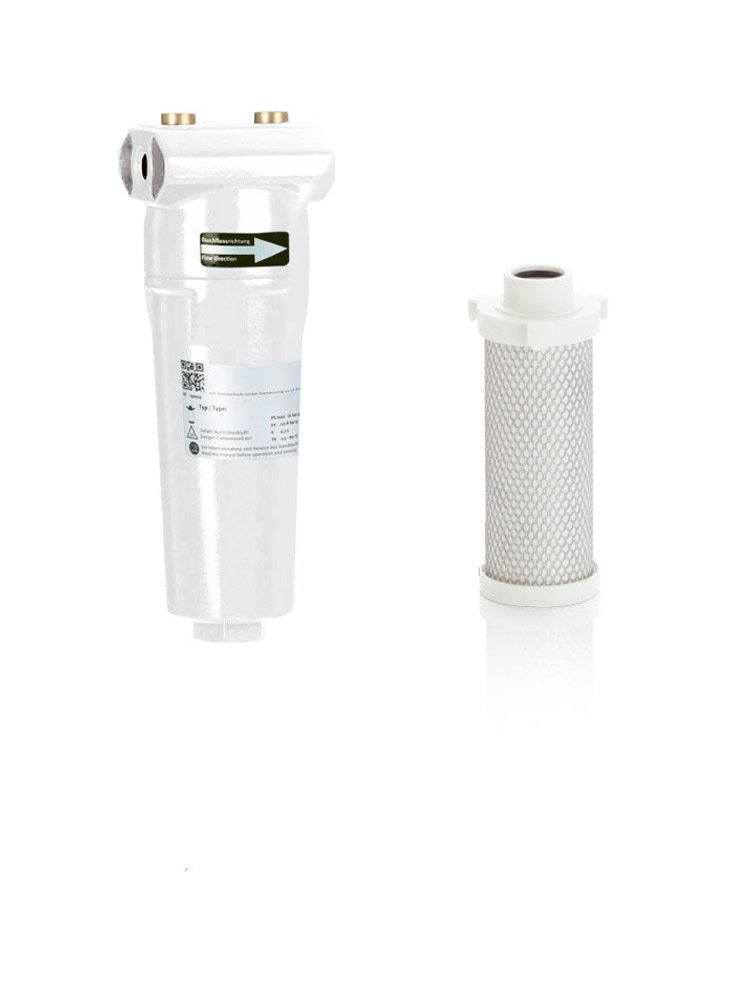
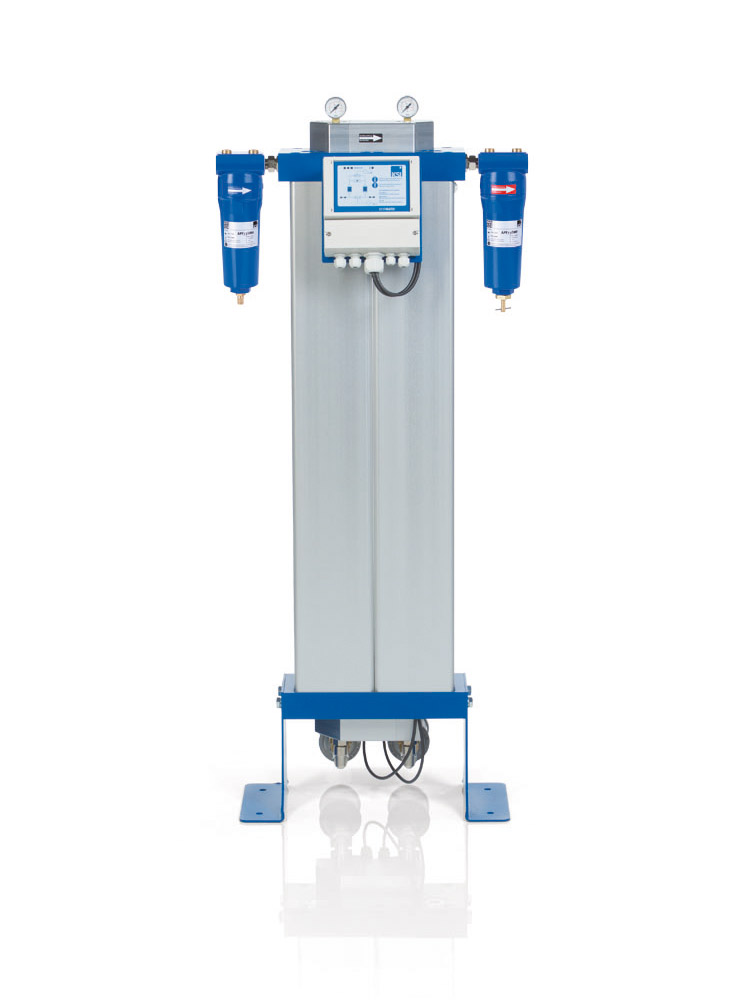
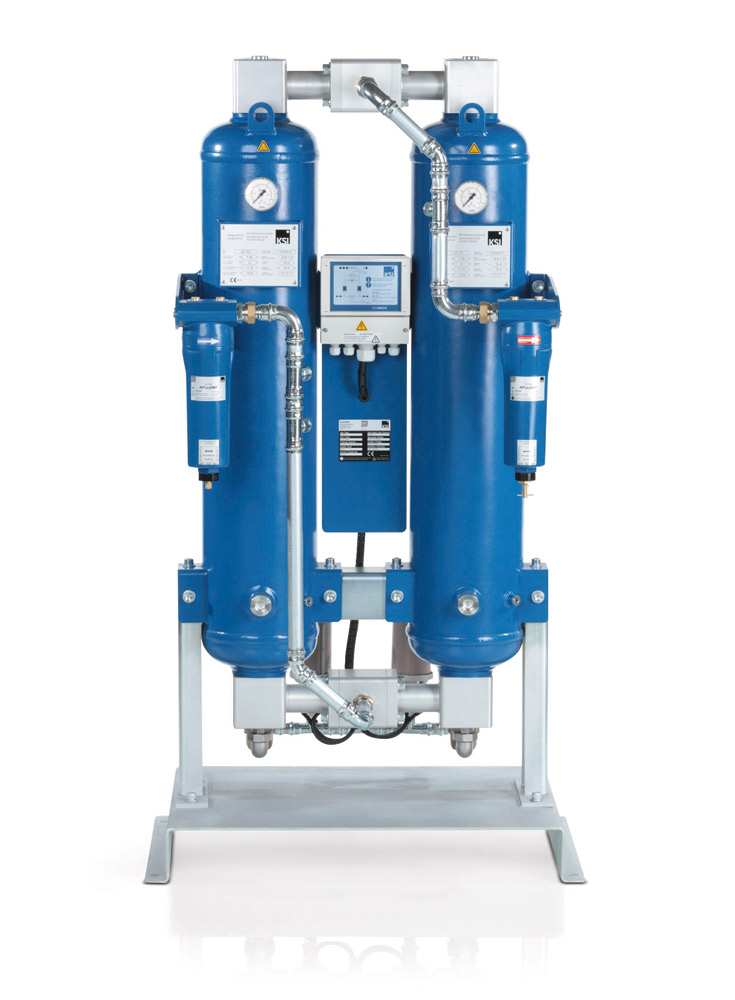
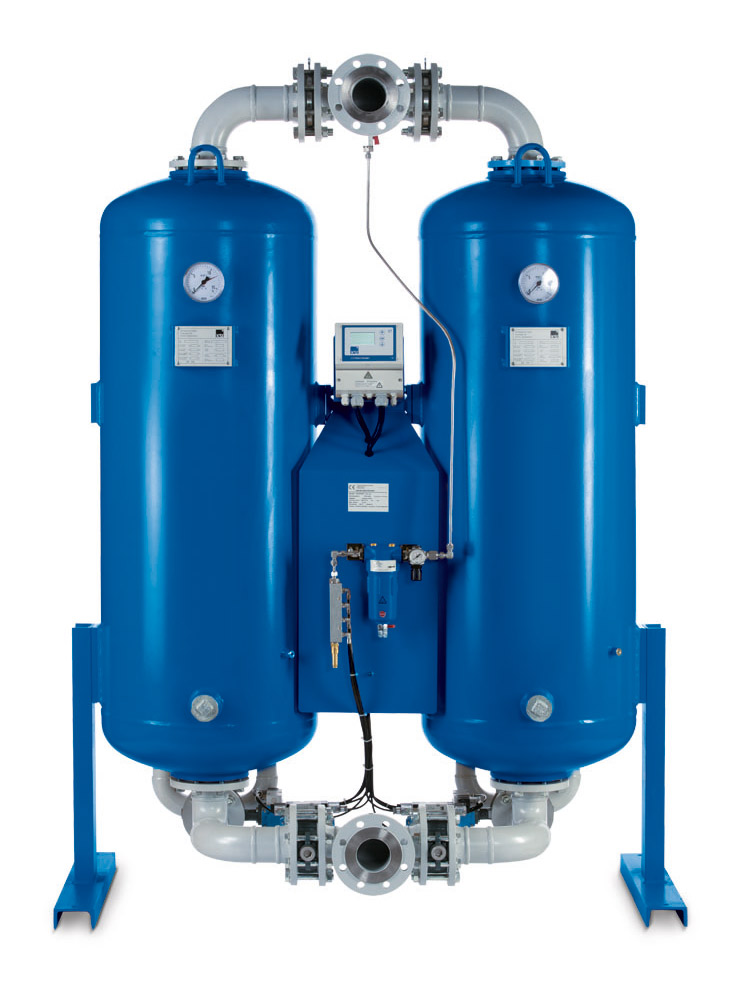
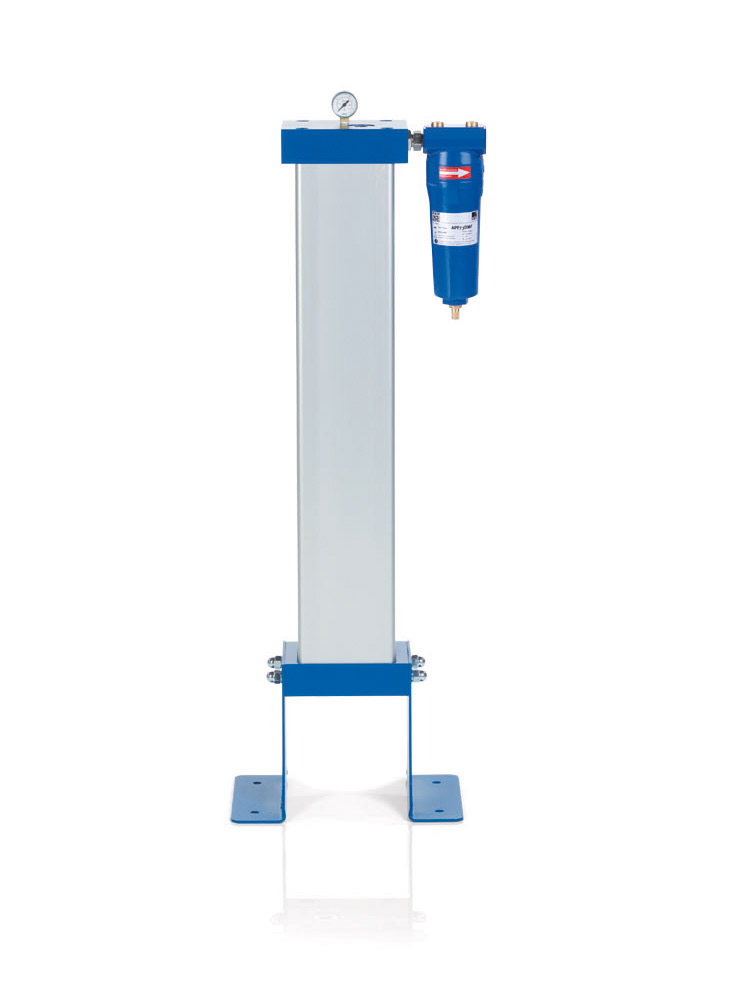
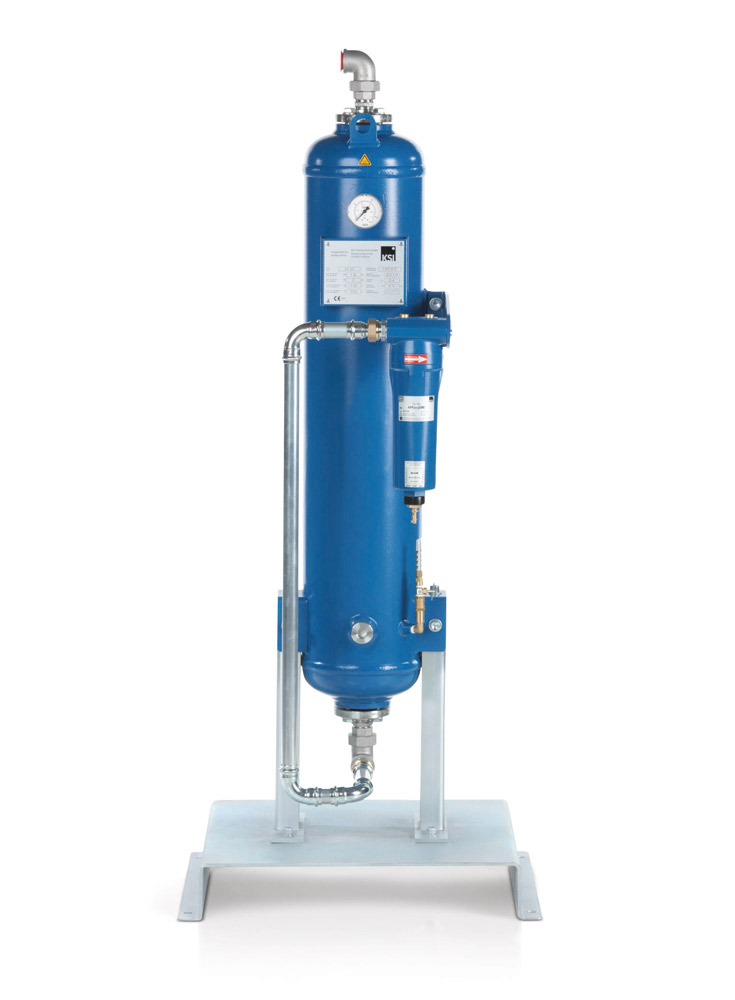
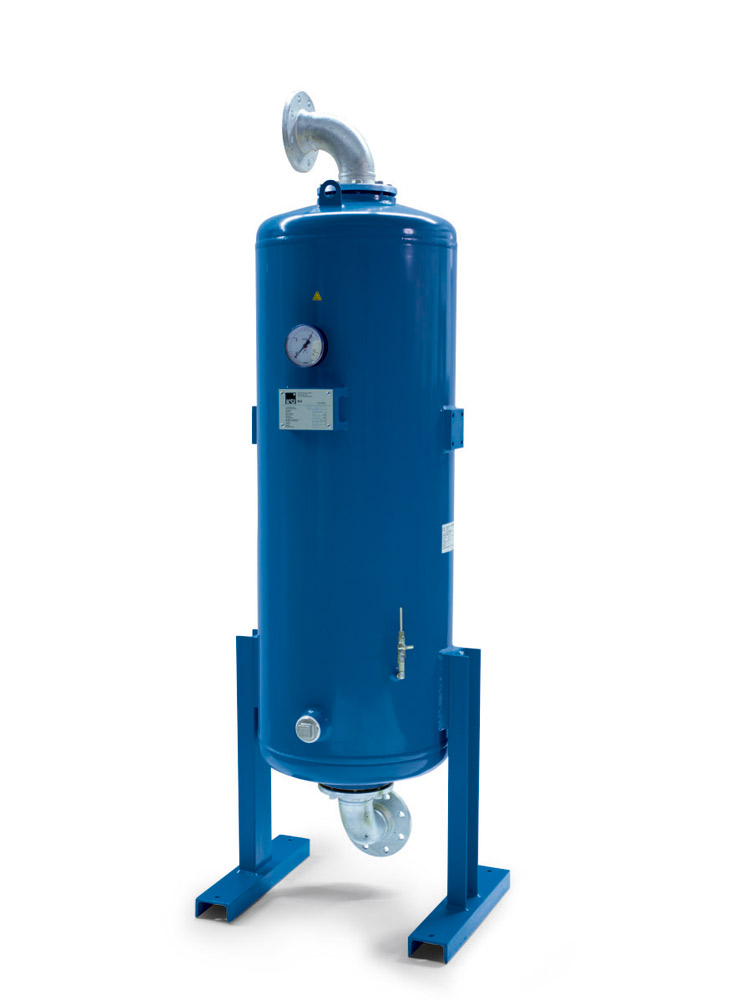
The first step to implementing a robust compressed air system in food production is selecting the right equipment to achieve the required quality. At the heart of any compressed air preparation system is the right dryer. To achieve a humidity class of 4 or lower, a refrigeration dryer is usually sufficient. If class 3 or higher is required, an adsorption dryer is the right solution.The residual oil content should be kept to a minimum in any food application, so an activated carbon tower should be used to adsorb the oil drawn into the air stream.If the air comes into direct contact with the food product, a filter system optimised for filtering microbiological contaminants such as bacteria or fungi should be used. These contaminants behave like particles in the compressed air stream and can therefore be effectively removed by a filter element. It is important to establish a procedure for regular sterilisation of the filter element in order to neutralise and remove the biological particles trapped in the filter medium.